Market Insight | 27 April
The European ultra-low sulfur diesel (ULSD) market is currently defined by acute physical tightness and high price volatility, with regional fundamentals driven by a persistent supply-side imbalance and multi-month low inventory levels. Market participants characterize the current landscape as a “hand-to-mouth” trading environment, where prompt demand remains robust despite extreme fluctuations in underlying futures and headline-driven market sentiment.
Key Supply & Demand Factors
Fundamentals remain constrained as regional stocks in the Amsterdam-Rotterdam-Antwerp (ARA) hub have trended lower, reaching multi-month lows. Supply side pressure is further exacerbated by refinery economics; high physical cracks for jet fuel have incentivized refiners to maximize jet production at the expense of the diesel pool, a regrade dynamic that has significantly limited ULSD availability. On the demand side, the gradual start of the spring agricultural planting season has provided a firm floor for consumption. Additionally, the seasonal decline in heating demand for 50 ppm gasoil has led to that grade being utilized more heavily as a blending component for ULSD in markets like Germany and Switzerland. Logistics also pose a challenge, as low water levels at the Kaub chokepoint on the Rhine have restricted barge loading capacities, hindering the delivery of product to inland European destinations.
Price Movements
The following price movements characterize the European ultra-low sulfur diesel (ULSD) market during the latter half of April 2026:
- Mid-April Highs: On April 13, the market opened the period with 10 ppm ULSD CIF Mediterranean cargoes assessed at $1,402.50/mt and CIF Northwest Europe (NWE) cargoes at $1,382.75/mt.
- Sharp Correction: Prices saw a precipitous decline on April 14, with CIF NWE physical values falling 1,233.00/mt and CIF Mediterranean values dropping to $1,315.25/mt.
- Monthly Price Floor: Fundamentals reached an April low on the 17th, with CIF NWE assessments plunging to 1,197.00/mt.
- Recovery and Rally: Physical values rebounded significantly by April 22, as CIF NWE rose to 1,312.50/mt.
- Narrowing Regional Spreads: The Mediterranean’s structural premium over Northwest Europe narrowed drastically toward the end of the month, falling from a 19.75/mt on April 23 as Med prices softened while NWE prices rose.
- Regional Price Inversion: By April 27, physical values in the north moved to a premium over the Mediterranean; CIF NWE cargoes reached 8/mt premium over the Mediterranean value of $1,325.00/mt.
- Futures Market Volatility: ICE low-sulfur gasoil (LSGO) frontline futures tracked the physical trend, hitting a monthly floor of 1,276.25/mt by April 27.
- Paper Market Differentials: In the forward market, the ULSD 10 ppm CIF Mediterranean swap for May was assessed at $1,182.75/mt on April 22, while the June swap stood at $1,103.75/mt.
- Barge Market Performance: In the Northwest European hub, 10 ppm ULSD FOB ARA barge differentials to front-month ICE LSGO futures moved from a 11.25/mt premium by May 7 (assessed on April 24).
Trade Flow Changes
European trade behavior has shifted towards an increased reliance on North American ULSD imports to mitigate regional supply gaps. Northwest Europe (NWE) has specifically attracted rare volumes from the US Atlantic Coast and Canada, totaling approximately 471,000 mt and 36,000 mt respectively in April. These flows are notable as they represent the first such arrivals from the US Atlantic Coast and Canada since October and November 2025.
While Northwest Europe received roughly 4.8 million barrels of diesel from the US in April to date, the Mediterranean basin has secured significantly less, totaling only 941,800 barrels. This disparity is driven by freight cost advantages and shorter voyage times, which incentivize exporters to point barrels toward NWE rather than the Mediterranean.
Outlook
Market participants and analysts anticipate that the physical tightness currently defining the European ULSD market is likely to persist through May. Despite elevated flat prices at the pump, there has been no significant evidence of demand destruction across the Mediterranean or Northwest Europe thus far, as seasonal consumption is supported by the spring agricultural planting season and the approach of the peak summer driving period.
The supply-side outlook remains precarious, with some traders warning that refinery run cuts could become probable in May if regional refining margins do not stay sufficiently above high crude costs. This risk was flagged in Alkagesta’s 21 April report, where negative margins for light products were identified as a key driver of potential run cuts across European and Japanese refineries through Q3. This potential reduction in throughput is further exacerbated by the regrade dynamic, in which refineries are incentivized to maximize the production of other middle distillates at the expense of the ULSD pool due to more attractive physical cracks for those products.
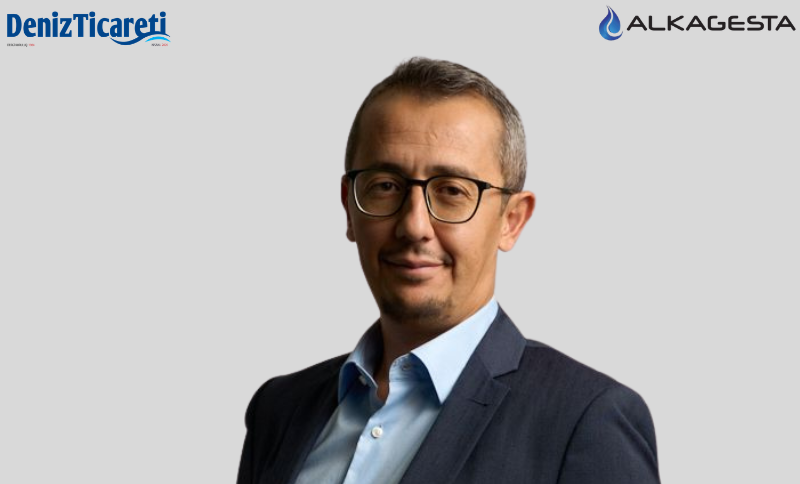
This dynamic has broader implications beyond the diesel pool. Alkagesta CEO Orkhan Rustamov noted that heightened military-grade jet fuel deliveries into the NATO Central Europe Pipeline System during March and April displaced civilian volumes across major European airports — an additional structural factor tightening the middle distillate complex and reinforcing the regrade incentive for refiners.
Consequently, participants may be forced to bid up diesel prices to rebalance the middle distillate complex and attract the necessary imports required to bridge existing regional supply gaps. Market participants continue to monitor developments via Alkagesta News as conditions across the European ULSD market evolve through Q2.
Disclaimer
This insight reflects Alkagesta’s views on historical developments and potential future trends in energy markets, demand, and supply dynamics. The analysis is based on Alkagesta’s internal assessments and publicly available information from a variety of external sources. Certain numerical data referenced in this insight is derived from or informed by information published by S&P Global Platts, including the Platts Long-Term Oil Demand Outlook.
This insight may contain forward-looking statements, including projections, expectations, estimates, and assumptions regarding future developments. Actual outcomes may differ materially from those expressed or implied due to a range of factors beyond Alkagesta’s control, including changes in economic conditions, technological developments, regulatory or policy changes, geopolitical events, shifts in energy demand and supply, or other market developments.
The information provided is for general informational purposes only. While Alkagesta believes the information is derived from reliable sources, no representation or warranty is made regarding its accuracy or completeness. Alkagesta assumes no obligation to update or revise any statements or information contained herein.
This material may not be reproduced or distributed without the prior written permission of Alkagesta. All rights reserved.
About Alkagesta
Alkagesta is a global commodity trading house specializing in petroleum and steel products, fertilizers, and biofuels. Established in Malta in 2018, the company operates as a multinational enterprise with 17 offices and representations worldwide. Alkagesta maintains partnerships with 28 international banks and conducts trading activities across 48 countries, facilitating approximately 9 million metric tons of commodity flows annually. Its extensive logistics network includes access to more than 700,000 cubic meters of storage capacity across Europe and Asia, supporting efficient and resilient global supply chains.
The company offers fully integrated trading capabilities — from sourcing and storage to delivery — underpinned by robust risk management, compliance, and governance frameworks.
Alkagesta was founded in 2018 by its management team and remains privately held and governed by senior leadership. Senior leadership, including the founding team, holds a significant equity stake in the company, which continues to grow in alignment with performance and strategic contribution. Today, the Group employs over 165 professionals and is built on tested systems, experienced governance, and a culture of continuous development.
Media Contact: